
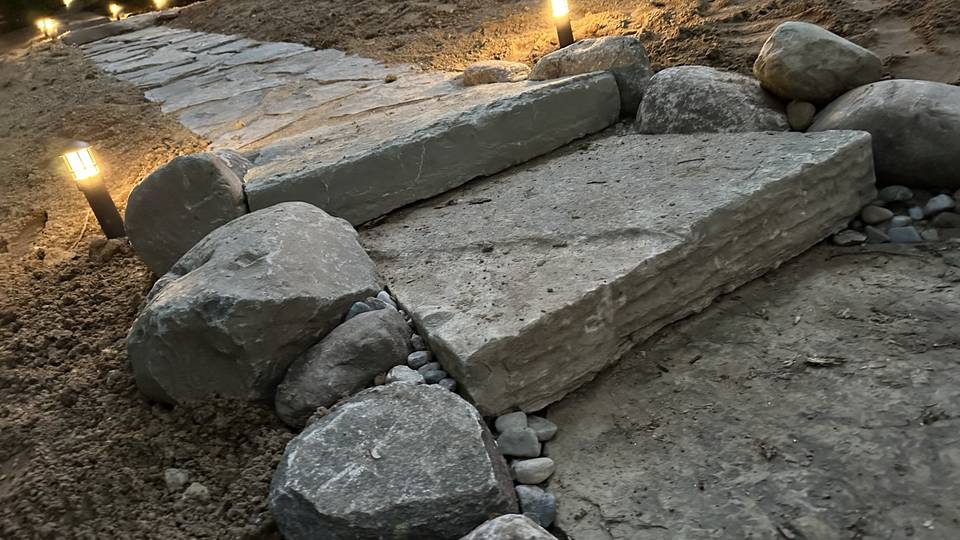
Stone steps in Howell, MISteps that climb the hill
Ledge rock steps for slopes, walkouts and lake lots, including the hard-to-reach ones. We carry the stone to the spot and set each tread to last.
- Free estimates
- Licensed and insured
- Own crews and equipment
Slopes and walkouts
A staircase built into the hill
A slope with no steps gets worn into a path, and a path on a slope washes out.
Good steps are the same height and depth all the way up. People trip on the one that is different. We lay the whole run out first, then work from the bottom, setting each stone on a firm base so it cannot rock or sink.
We use ledge rock for most of our steps. It is thick, flat and heavy, and it stays where it is put. It also pairs well with boulder or ledge walls on either side.
- Ledge rock steps for slopes, walkouts and lake lots
- Landings and turns on long runs
- Steps tied into retaining walls, patios and walkways
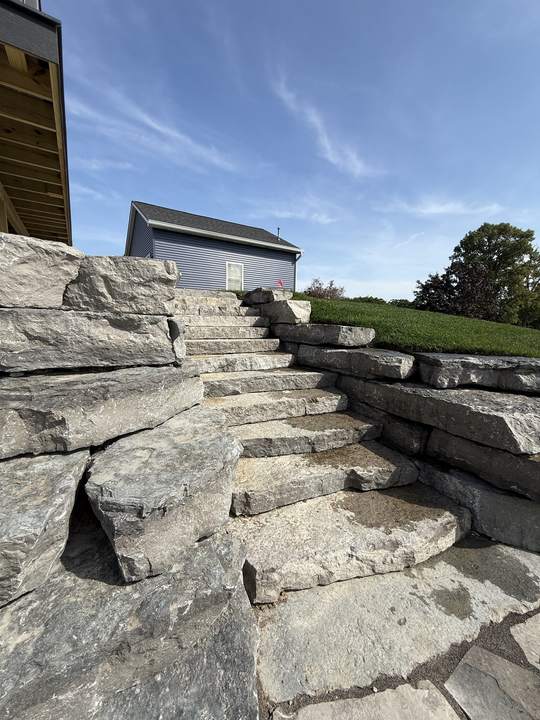
The hard part
Getting stone to where the steps go
The best step locations are often the hardest to reach. That is where having our own equipment helps.
Steep lake hills
Lakefront slopes can run long and steep with little room to work. We plan the staging and the route for the stone before the first one is moved.
Tight side yards
Where a skid steer fits, we use it. Where it does not, we plan the trip carefully and move stone with smaller equipment.
Long runs
A long stair needs landings so legs get a rest and runoff has a place to break. We build those in rather than leaving a straight chute.
Drainage
Water coming down the hill will try to take the steps with it. We route it to the side and give the base a way to drain.
Frost
Stone on a thin base rocks in the first winter. A compacted stone base under every tread is what keeps them in place.
Access for the crew
We walk the property first, and we tell you if a route needs a tree trimmed or a gate opened.
How a stair gets built
Bottom up, one tread at a time
Lay out the run
We measure the rise from bottom to top, choose a step height that works for the whole run and mark the landings.
Cut in the base
We dig into the slope, remove soft soil and build up compacted stone where each stone will sit.
Set the stone
Starting at the bottom, each stone is placed, checked for level and pitch, and backed with stone so it cannot move.
Tie in the sides
Walls, planting beds or a handrail location are built beside the steps so the slope does not slump into them.
Restore the slope
We seed, plant or sod the disturbed ground and haul away what we dug out.
Steps at the waterline can fall under state shoreline rules. See seawalls and shoreline stone if the work touches the lake.
From a customer with a lakefront staircase
They put in over 60 steps on my lakefront property. It wasn’t an easy job but it turned out great.
Bill H. Lakefront stone steps, Google review
Steps and stone stairs
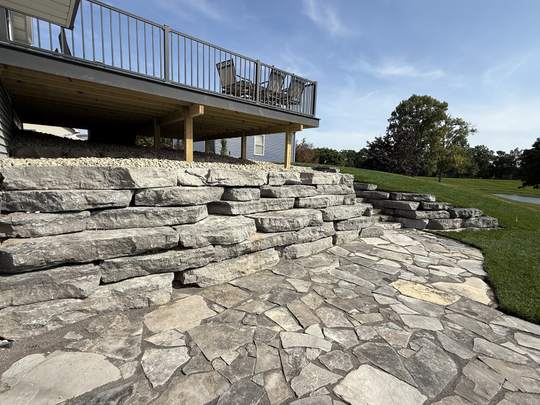
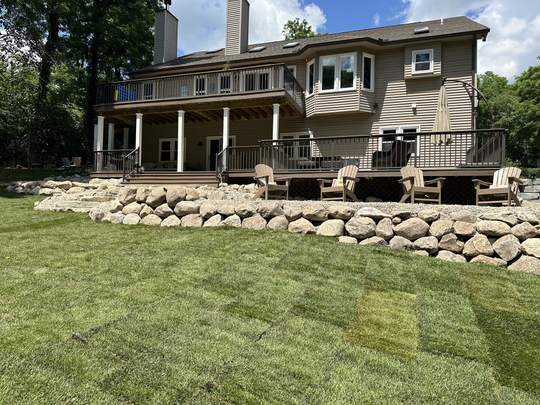
Ledge rock terraces and flagstone below a deck 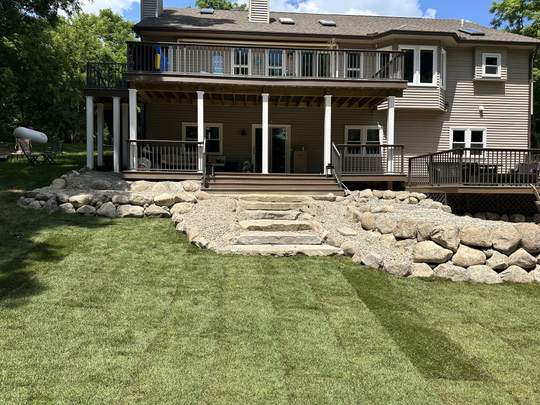
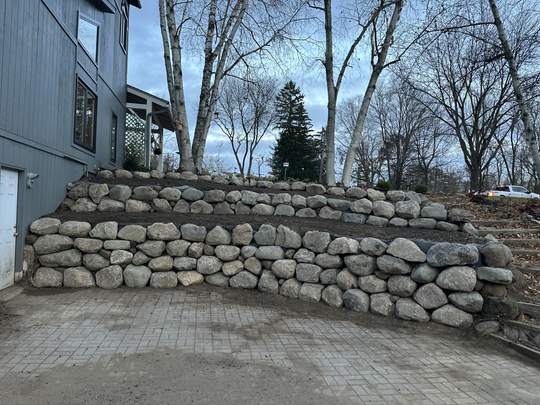
Steps built into a boulder wall 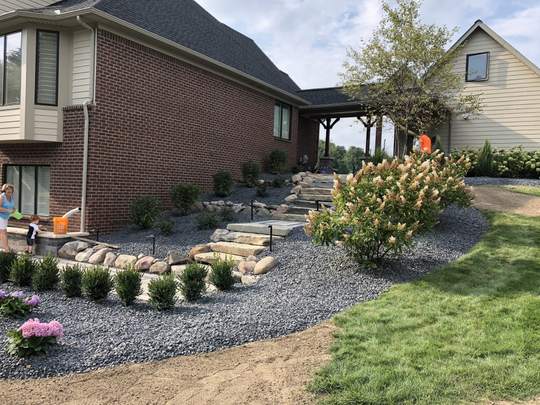
Front-yard beds and stone steps 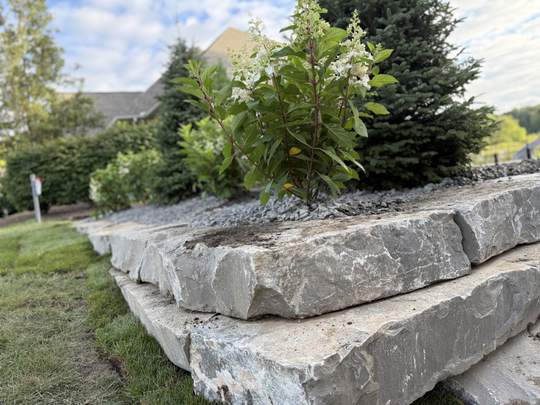
Ledge rock raised bed 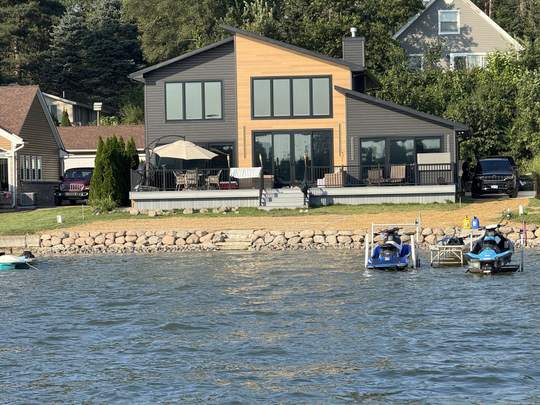
Stone shoreline in front of a lake home 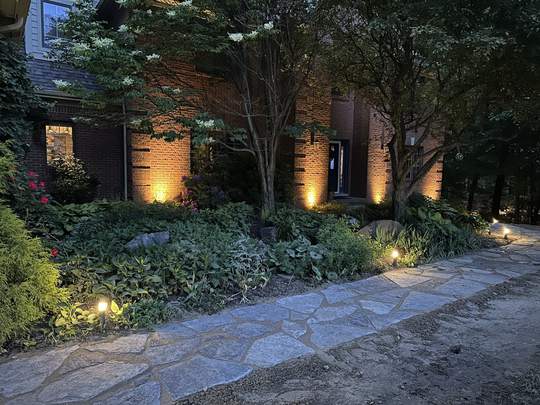
Flagstone walk and planting beds at dusk
Common questions
Can you build steps on a steep lake hill?
Yes. Lakefront slopes are some of the harder steps we do, and one customer had over 60 steps put in on his lakefront property. We plan the route for the stone before we start.
What stone do you use for steps?
Mostly ledge rock. It is thick and flat, and it stays put. We can also pair it with boulders or flagstone if that fits the house.
Do steps need handrails?
That depends on the height and your local code. We check with your building department, and we leave room to add rails where they are needed.
Will steps shift in winter?
Stone on a compacted base with drainage holds well. Movement comes from soft ground or water sitting underneath, which is why we spend time on both.
Do I need a permit for steps?
Usually not for steps on your own slope, but anything at the water's edge can need a state permit. We check what applies to your property before we start.
How do I get an estimate?
Call or fill out the form. We walk the slope and give you a free estimate. We respond within 24 hours.
Where we work
We work out of our shop in Howell, across Livingston County and into Oakland, Washtenaw and southern Genesee counties.
Oakland County
Washtenaw County
Genesee County
More from Nelligan's
Ready to talk about your property?
Free estimates, honest advice and no pressure. Call the shop or send a request and we will get back to you within 24 hours.